Finance & Operations
Free Equipment Rental Agreement Template (PDF)
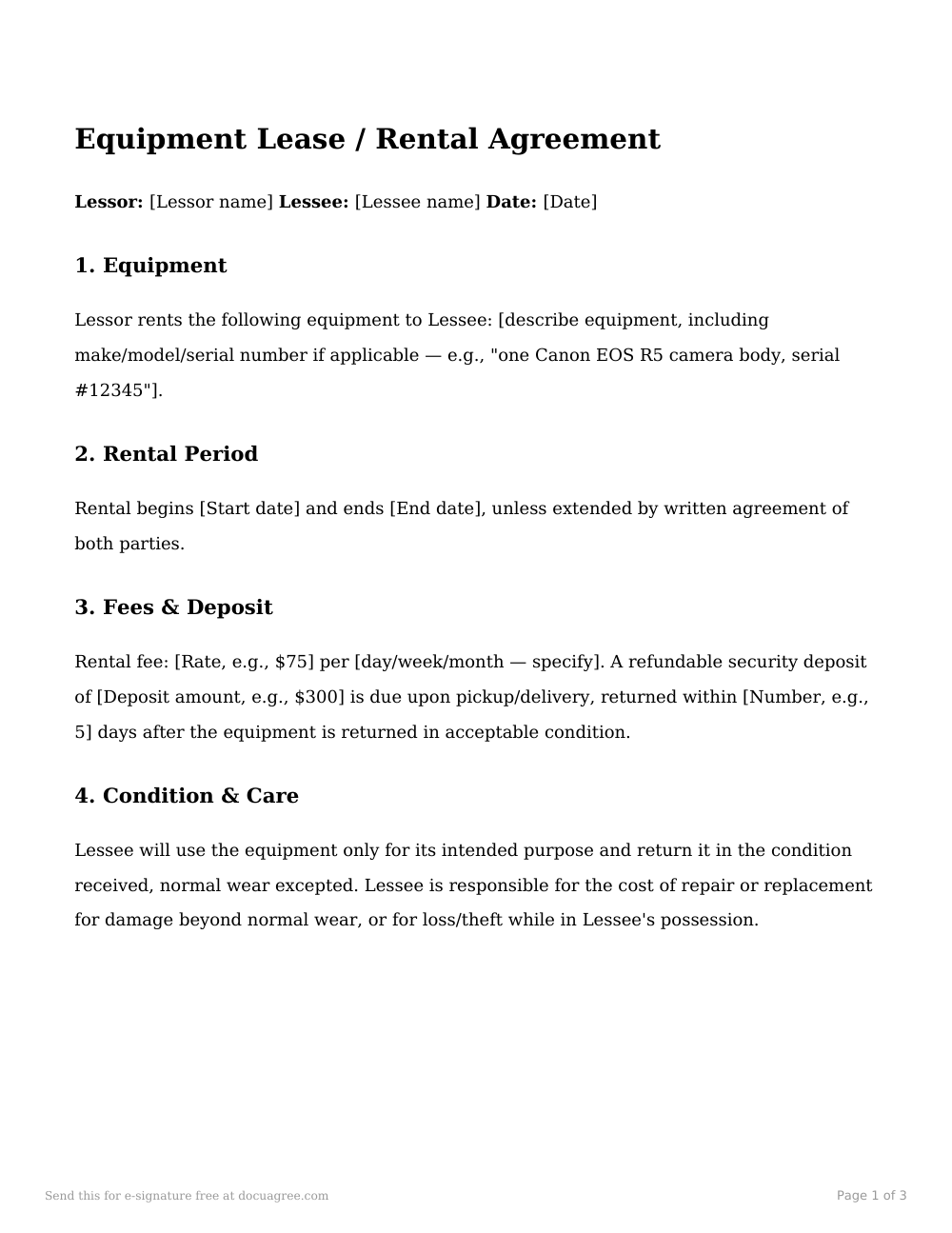
An equipment lease or rental agreement covers renting out physical equipment — the rental period, fees and deposit, who's responsible for damage, and the terms for returning it.
Download the template
Free, no signup required. Fill in the blanks by hand, or use it below to fill and send for signature.
When to use it
Use this any time you're renting equipment to someone (or renting equipment yourself) for more than a casual, informal loan — it protects both sides on the details that matter most: condition on return, deposit terms, and what counts as damage beyond normal wear.
What's typically included
- Equipment description
- Rental period
- Fees and deposit
- Condition and care
- Return terms
- Insurance and liability
- Governing law
How to fill it in
- Describe the equipment specifically, including make, model, and serial number where applicable — this matters if there's ever a dispute about what was actually rented or its condition beforehand.
- Set the security deposit and the return window (how many days after return it's refunded) as real numbers — a deposit with no clear return timeline tends to become a point of friction.
- Note any insurance requirement explicitly if you have one — the template includes an optional line for it, but leaves liability for loss or damage on the lessee either way.
This template is a general starting point, not legal advice — customize it and have it reviewed for your situation.
Frequently asked questions
Who's responsible if the equipment is damaged or stolen during the rental period?
The lessee (the person renting the equipment) is responsible for the cost of repair, replacement, or loss beyond normal wear, per the condition and care section — this is exactly what the security deposit is meant to help cover.
Is an electronically signed equipment lease legally binding?
Yes, under the U.S. ESIGN Act and state UETA laws, the same as any other contract.
What counts as normal wear versus damage I have to pay for?
This template doesn't define a precise line — it's worth agreeing on specifics for higher-value equipment (e.g., cosmetic scuffs are normal wear, a cracked lens is not) directly in the condition and care section rather than leaving it to interpretation later.
Ready to use this template?
Every word is editable before you send — this is a starting point, not a final draft.